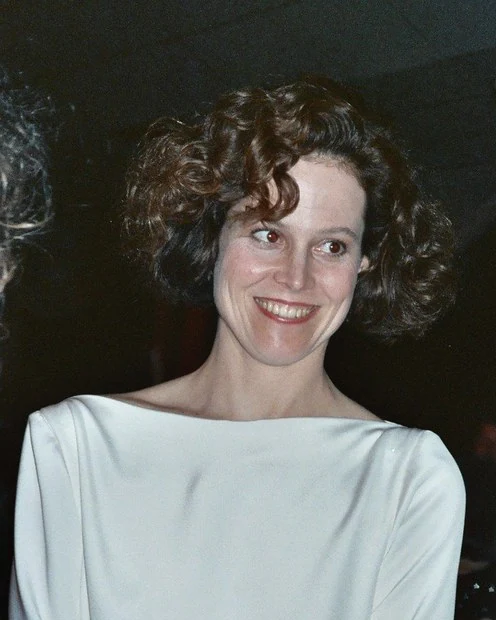
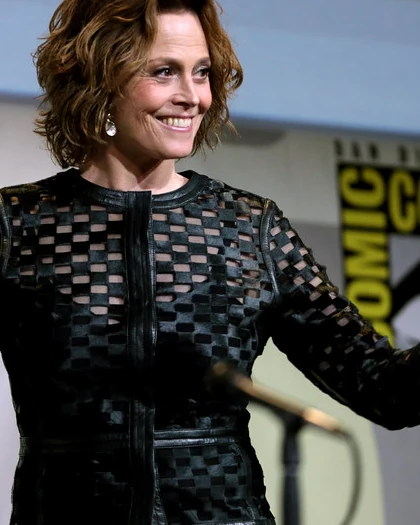
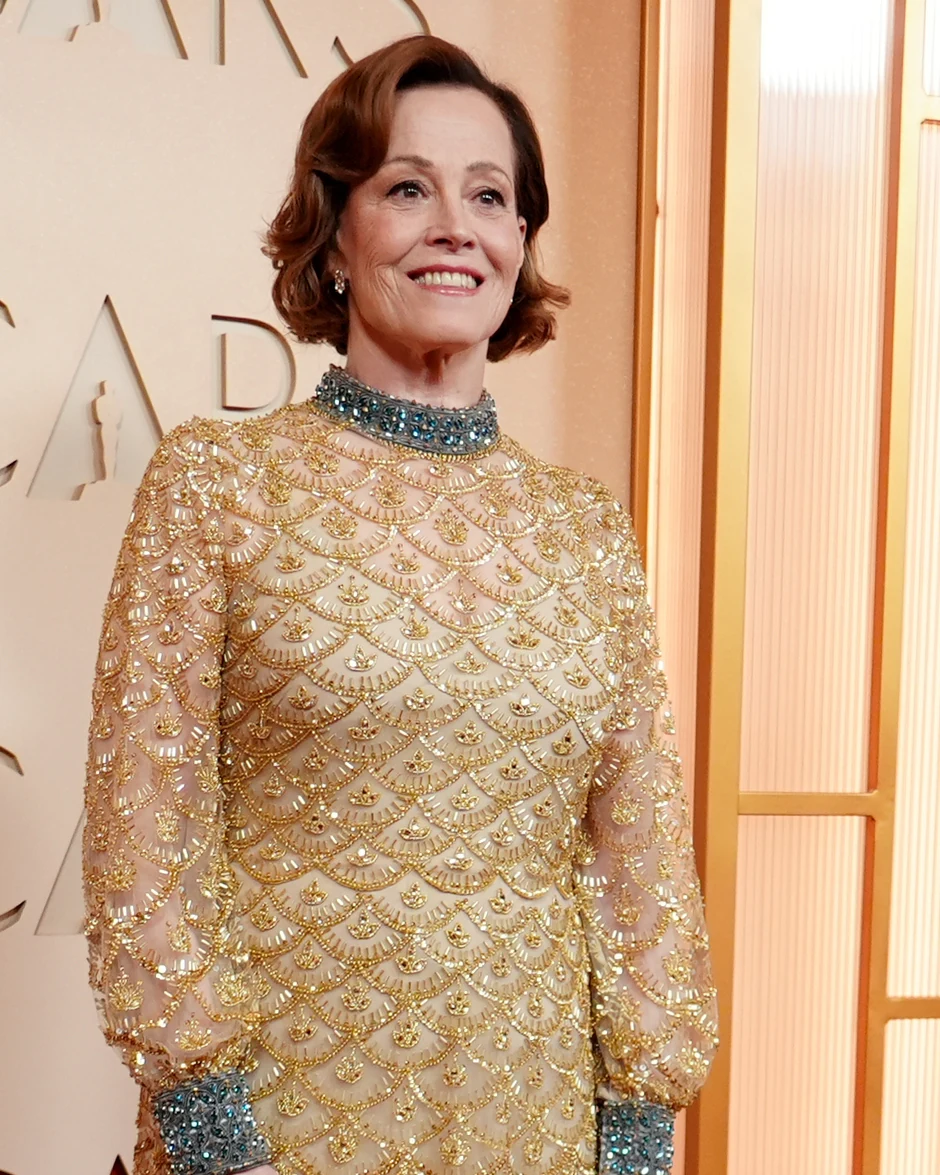
Sigourney Weaver’s then-and-now comparison links a 1989 portrait with her arrival at the Oscars on 15 March 2026. The earlier picture belongs to an extraordinary phase of recognition after Aliens, Gorillas in the Mist and Working Girl. It does not show her on the set of Alien in 1979. The two dates describe different parts of a much longer story.
Weaver is often introduced through Ellen Ripley, and there is a good reason for that. The character remains an instantly recognisable part of film history. But the older portrait is also a reminder that Weaver was doing more than one kind of acting during this period. She could be an action-film lead, a dramatic figure or a sharp comic presence. The interest in comparing the photographs is to rediscover that breadth.
Why Ripley still shapes the memory
In Alien, danger grows inside a workplace whose ordinary routines gradually stop offering protection. Weaver’s Ripley becomes central through decisions, attention and survival. The character is compelling partly because she does not begin as someone safely outside the rules of the setting. Her competence develops meaning as the situation becomes more frightening and the familiar environment becomes harder to trust.
Aliens, released in 1986, changes the scale and rhythm. The BFI’s film entry identifies the film and its expanded relationship between Ripley and Newt. The shift is important: a sequel can bring back the same person while giving her a new emotional task. Recognition is the starting point, not the whole dramatic plan.
For viewers who first encountered Weaver through Ripley, a historical portrait can seem to carry the character with it. That is a strong example of how cinema shapes public memory. Yet Weaver at a public event is not Ripley between adventures. Distinguishing the actress from the character makes it possible to appreciate both the iconic role and the other work happening alongside it.
The late-1980s period was more than science fiction
Working Girl uses Weaver in a very different world: offices, ambition, professional presentation and the struggle to be taken seriously. Authority here is performed through clothes, speech and social access rather than action equipment. A character can control a room by sounding as though everything has already been settled. The film can then turn that control into a source of tension and comedy.
Gorillas in the Mist offers another contrast, with Weaver playing Dian Fossey. Put these roles beside Ripley and the value of the 1989 reference becomes clear. The period joins several kinds of visibility. Someone who remembers the business suit may have a different first association from someone who remembers the spacesuit, even though both are remembering the same actress in a concentrated stretch of work.
This breadth matters when people use the word “prime”. It can mean the period of a defining role, major recognition or unusually varied work. Here, the late 1980s provide a strong answer because they bring those meanings close together. The photograph marks the era; it should not be asked to prove that everything important in Weaver’s career happened before or during that year.
For a first viewing, keep the dates of the roles separate from the portrait’s year. A 1989 event photograph can illustrate the recognition surrounding films released before it. It does not move those films into 1989. This is particularly helpful when finding an older movie: search by the film’s own title and release year, rather than the date printed beside a celebrity photograph.
How Weaver makes authority readable
An accessible way to watch Weaver is to follow how her characters occupy space. A person who stands still and listens may appear to have more control than someone who fills the room with movement. The same stillness can also suggest caution or an effort not to reveal fear. The surrounding story tells us which meaning is active.
Ripley’s authority often comes from noticing practical consequences while others dismiss them. A comic character may sound similarly certain but use that certainty for entirely different purposes. This is one reason a performer can become familiar without becoming predictable. The audience recognises a quality and then waits to discover how the new film will use it.
Try watching an exchange before a crisis rather than only the crisis itself. Who interrupts? Who waits? Who has to explain a decision? Small changes in those patterns can tell you when a character’s position is shifting. Weaver’s work rewards that kind of attention because power is often visible in her scenes before anyone explicitly names it.
Comedy, imitation and the pleasure of a familiar image
A durable screen identity also makes comedy possible. Galaxy Quest plays with the gap between performers, the characters audiences love and the practical demands of an adventure. Weaver’s presence has extra interest for viewers who know her science-fiction work, but the film still has to make sense to someone who simply follows the people in the story.
This kind of role uses recognition differently from a straightforward sequel. The viewer is aware of the history around the performer while watching a separate fictional person. The result can be affectionate, funny and surprisingly moving. The audience’s memory becomes part of the experience, without requiring the actress to replay the same role.
It is a useful companion to a photo comparison because it asks a related question: what do we think we know when we recognise a face? A strong answer usually includes more than a character name. It includes the kind of story, the tone of a scene and the expectations accumulated through earlier films. Those expectations can be redirected.
A continuing place in imagined worlds
Weaver’s later career includes another large fictional universe through Avatar. Such work changes the relationship between a performer and the image on screen. Costume, physical performance and visual effects all help produce the finished character. Recognising the actress may depend on voice, expression or movement as much as on a conventional portrait likeness.
In a 2026 BFI interview, Weaver discusses joining the world of The Mandalorian and Grogu. The piece connects her earlier work with a new science-fiction setting. It provides a concrete reminder that an image from a celebrated earlier period is one chapter among many, rather than a point after which the story stops developing.
For a viewer, these later roles can work in two directions. They may introduce Weaver to someone who then discovers Alien for the first time. Or they may bring a familiar performer into a new world for someone who has followed her for decades. A long career creates several possible routes through the same filmography.
Reading the photographs across the years
The current portrait is a documented Oscars arrival from 15 March 2026 in Los Angeles, identified in the event gallery. It gives this page its recent reference point. The 1989 portrait provides the earlier one. Their value comes from knowing who is pictured and when, without substituting a guess based on a remembered film.
Notice the styling and the way each photograph frames the subject. An older portrait and a modern awards image may have different levels of sharpness and contrast. Pose, clothing and the photographer’s distance also change the impression. The comparison is informative when these visible features remain attached to their actual dates and settings.
To explore further, watch Alien, then choose Working Girl or Galaxy Quest for a change of tone. You can also continue with Pedro Pascal’s route into global television fame or Demi Moore’s distinct dramatic chapters. Weaver’s photographs connect two moments; the performances show how many different kinds of presence can fit between them.