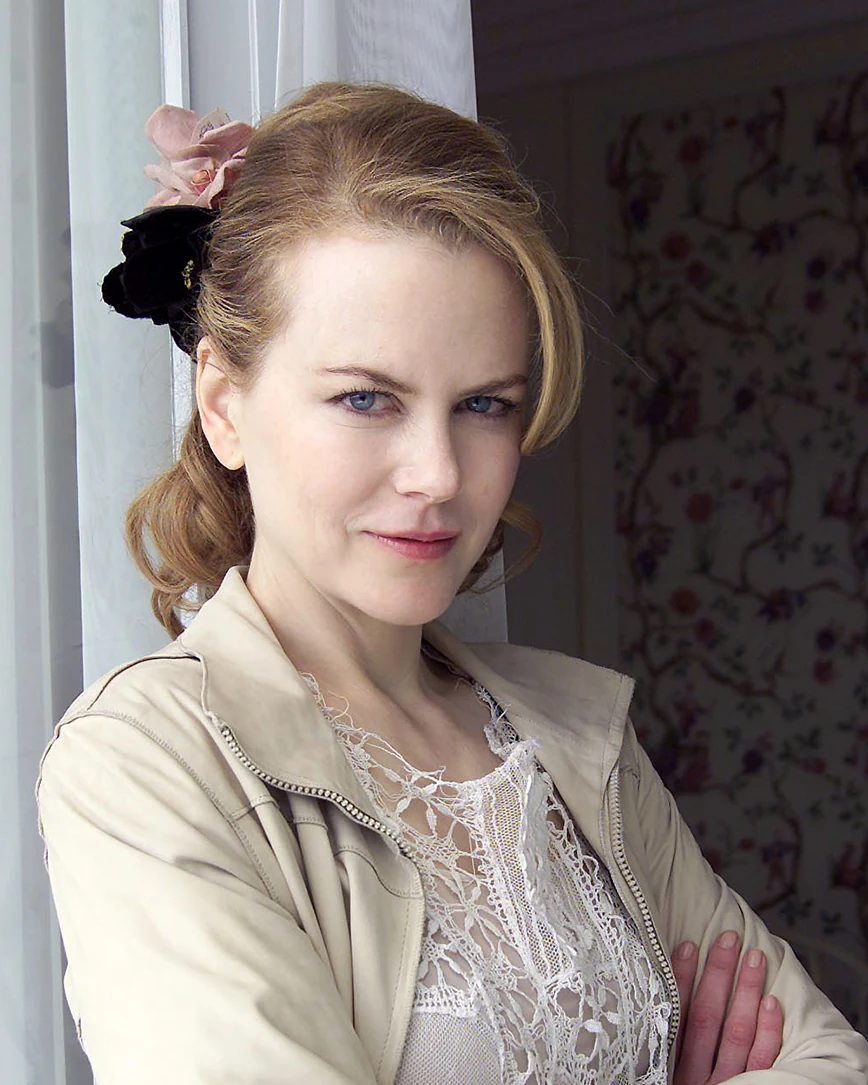

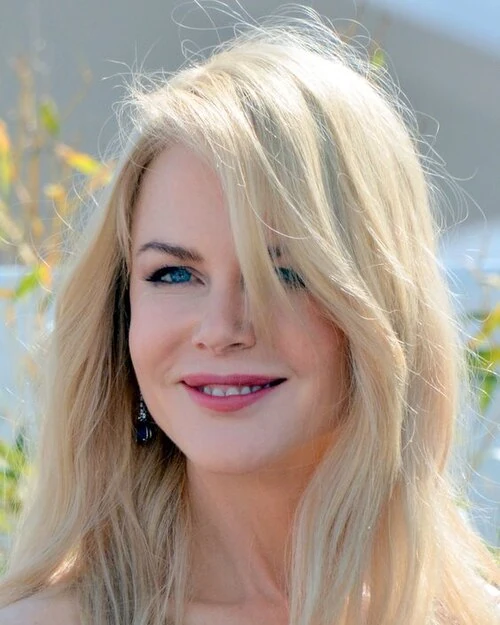

Nicole Kidman’s then-and-now comparison begins in 2001, the year of Moulin Rouge!, and returns to her at the Oscars on 15 March 2026. The earlier image belongs to a period when she was becoming associated with strikingly different leading roles. The newer photograph is a dated awards arrival, showing Kidman as herself rather than in the elaborate look of a character.
The interest is larger than a change of hairstyle or dress. Kidman has built a career in which appearance can be part of the performance: a stage star under bright lights, a writer withdrawn into thought, a woman managing a difficult social situation. The viewer learns to recognise her while also watching that recognition being unsettled. These photographs provide a simple way into that wider story.
Why 2001 matters
In Moulin Rouge!, Kidman plays Satine opposite Ewan McGregor. The studio’s record identifies the film and cast. The screen world is deliberately extravagant: colour, music, costume and rapid changes of tone make emotion feel larger than ordinary life. Satine has to belong inside that spectacle while remaining someone the audience can care about.
That balance is central to the role’s lasting appeal. A beautiful image can draw attention, but it cannot by itself sustain a romance. The character also needs to suggest worry, calculation and the possibility of a different future. When the film moves between performance and private feeling, Kidman has to make those shifts readable. Glamour becomes something the character uses, not the whole of the character.
The photograph from 2001 recalls this high-visibility period. It is useful as a record of Kidman’s public image around an important film, without needing to pretend it shows Satine. This distinction protects the comparison from a common mistake: treating an actor’s costume, make-up and lighting in a movie as the natural baseline for their appearance decades later.
The contrast with The Hours
The years around Moulin Rouge! are particularly revealing because The Hours points in another direction. Kidman portrays Virginia Woolf in a film built around connected lives and inward pressures. Where a musical can send feeling outward through song, a quiet dramatic scene can ask viewers to look for thought in a pause or a small change of attention.
Kidman won the leading actress Oscar for The Hours at the ceremony held in 2003. The Academy’s record establishes that milestone. It is a separate achievement from the earlier photograph’s date. Keeping the dates clear helps a reader see the sequence: a 2001 image, the dramatic work that followed, and then a public appearance twenty-five years after the starting point.
The two films also offer a practical lesson in watching acting. Try following the character’s attention. Satine often has to manage what other people see. Woolf can seem preoccupied by something that other characters cannot easily reach. One performance negotiates a show; the other makes internal strain visible. You do not need specialist vocabulary to notice how differently the audience is invited to look.
A star who does not stay in one kind of story
Kidman’s recognisability has not kept her inside a single genre. A family adventure asks for a different use of presence from an intimate drama. A thriller can turn composure into uncertainty. A comedy may make authority amusing by placing it against an unpredictable situation. The interesting question is often what a film does with the expectation that Kidman will appear controlled.
In The Others, an atmosphere of unease makes the audience examine a mother’s certainty. In Paddington, the story uses theatricality within a playful family world. These are not interchangeable roles merely because the same face appears in both. The setting changes the meaning of a look, the scale of a gesture and the amount of information the viewer is allowed to trust.
This is why a then-and-now gallery benefits from more than a list of releases. A title can remind you that you have seen a performer before. A short explanation of the role helps you place the memory. You might remember the tension of a room, an exaggerated entrance or the sound of a musical number before remembering the year on the poster.
Why television belongs in the picture
A screen career does not stop at cinema. Television can give an actor room to build a character across repeated encounters, allowing the viewer to notice habits and contradictions that might be compressed in a film. Kidman’s work in Big Little Lies is an important example of why audiences may associate an established film star with a later television character as strongly as with an earlier movie.
The experience of watching changes too. A character seen over several evenings can feel familiar in a different way from a figure remembered through one dramatic scene. Viewers spend time observing what the person says in public and how that differs from private behaviour. Recognition develops through accumulation, which is one reason a later role can become a fresh point of entry for a new audience.
If you first encountered Kidman through television, the 2001 photograph may look like an earlier chapter rather than the defining one. That is a perfectly coherent reading. Public fame does not arrive at the same moment for everyone. The same actor can be the star of a musical for one person and the face of a difficult domestic drama for another.
Looking carefully at the 2026 image
The current photograph shows Kidman at the Academy Awards on 15 March 2026 in Los Angeles. The event gallery supplies a dated caption. This is the firm basis for describing it as a 2026 photograph. The fact that an image appears in a recent article would not, by itself, prove when it was taken.
Formal event photographs are a particular kind of picture. They bring together clothes, deliberate styling, camera light and a short moment of posing. An older photograph may have a different crop, colour balance or level of detail. When you compare the photographs, start with those clear visual differences. They affect the overall impression before any discussion of age becomes useful.
The image cannot explain a private decision or establish a medical fact. Nor does it need to. The visible styling and the date are enough to create an informative comparison. The richer question is what you now associate with Kidman’s face after the performances that separate the photographs. Her screen identity has grown through changes of genre, medium and character, rather than through one repeated role.
Choosing a useful starting film
If you want the most direct connection to the earlier image, begin with Moulin Rouge!. Watch how Satine moves between being watched and trying to make a choice for herself. Follow it with The Hours for an almost opposite rhythm. You will see why a career can have several important periods without any need to choose one final, unquestionable peak.
For a third step, choose a different kind of viewing experience rather than another similar role. The Others offers suspense, while Paddington uses a heightened villain inside a family adventure. Television provides another route if you prefer time with a character. These are ways to explore range, not instructions to watch every title before understanding the photographs.
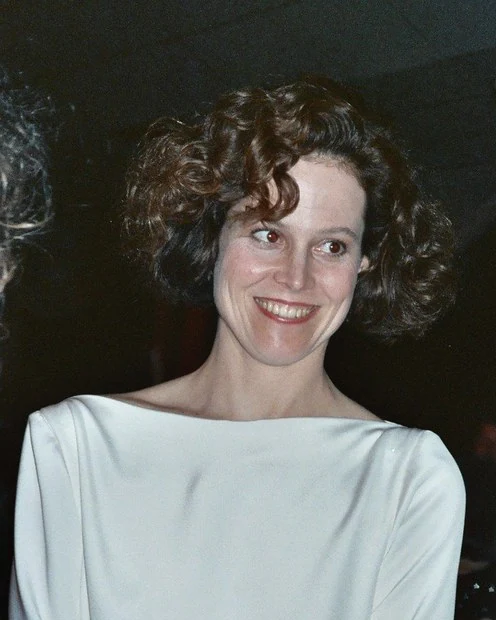
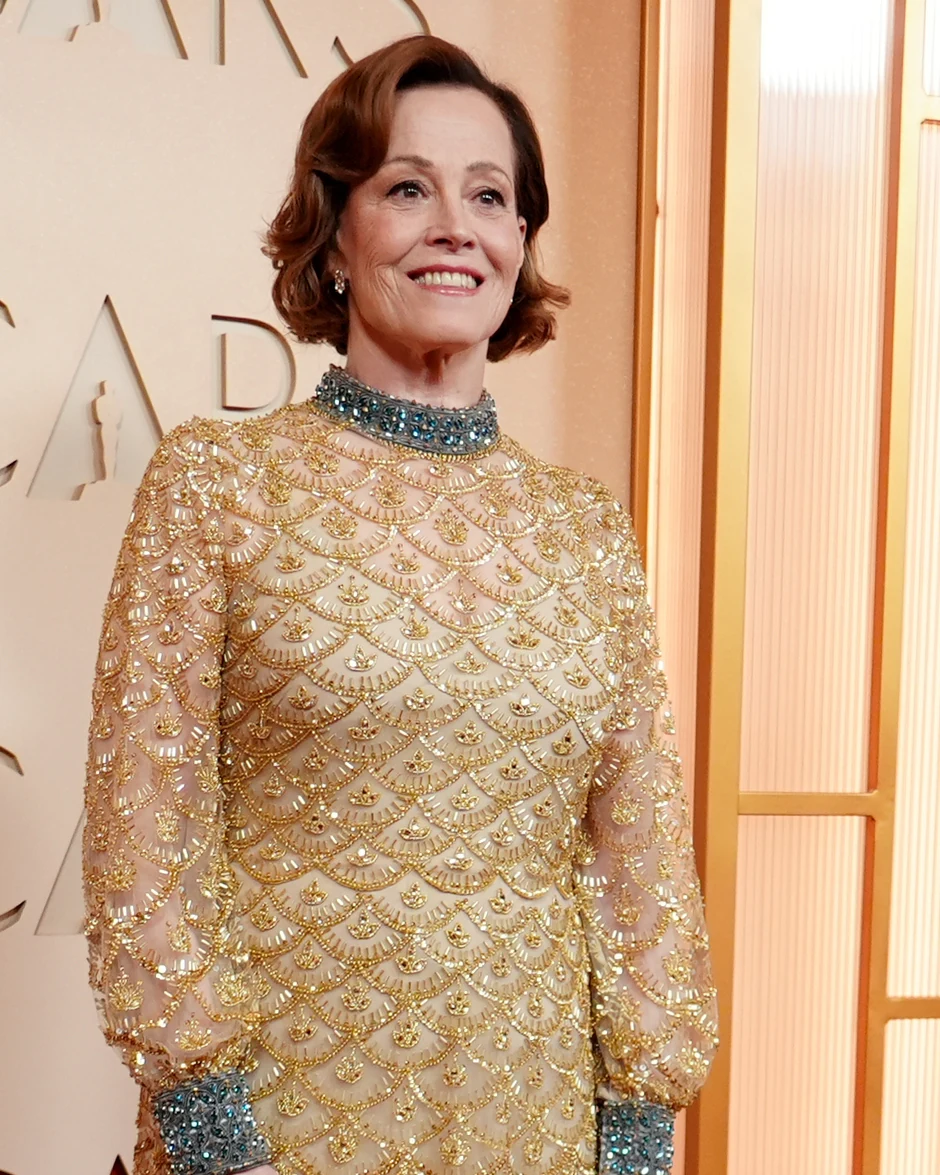
Kidman’s profile sits beside other careers that resist a single label. Anne Hathaway’s comparison moves from accessible comedy towards more demanding dramatic work. Sigourney Weaver’s story shows how an iconic science-fiction role can coexist with comedy and other kinds of authority. Together, they make the point visible: a familiar face can keep finding different jobs on screen.